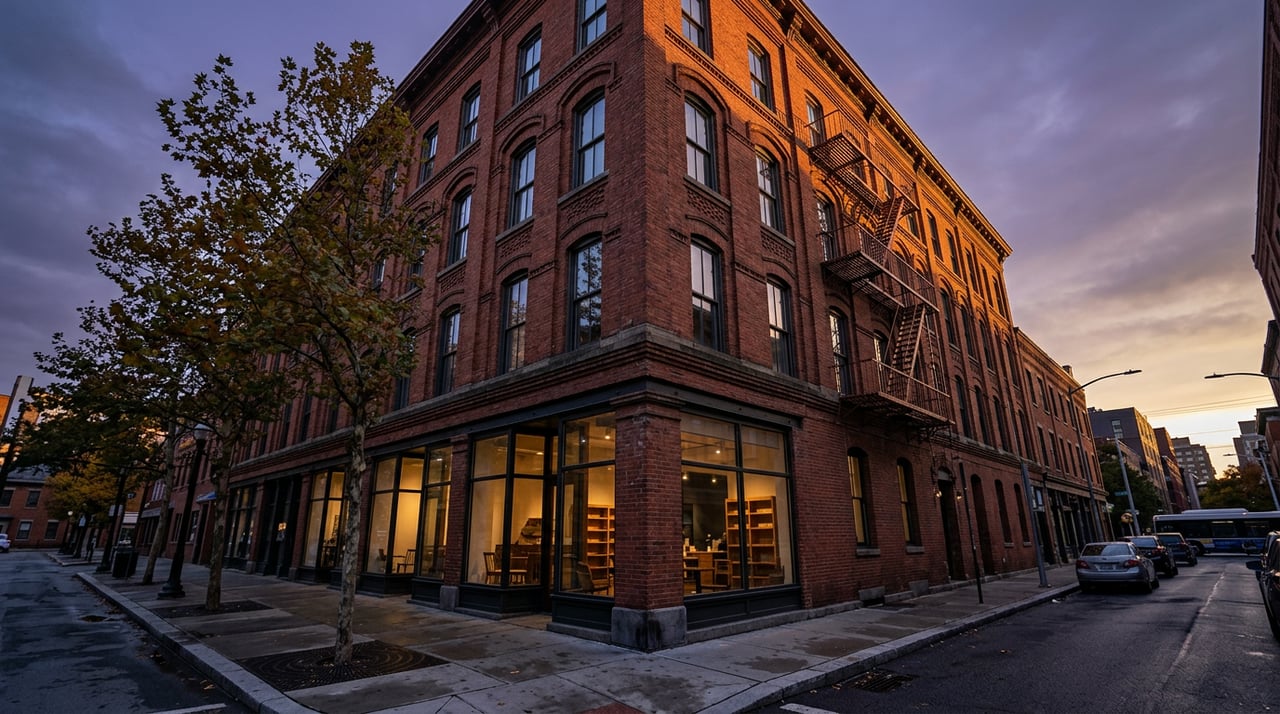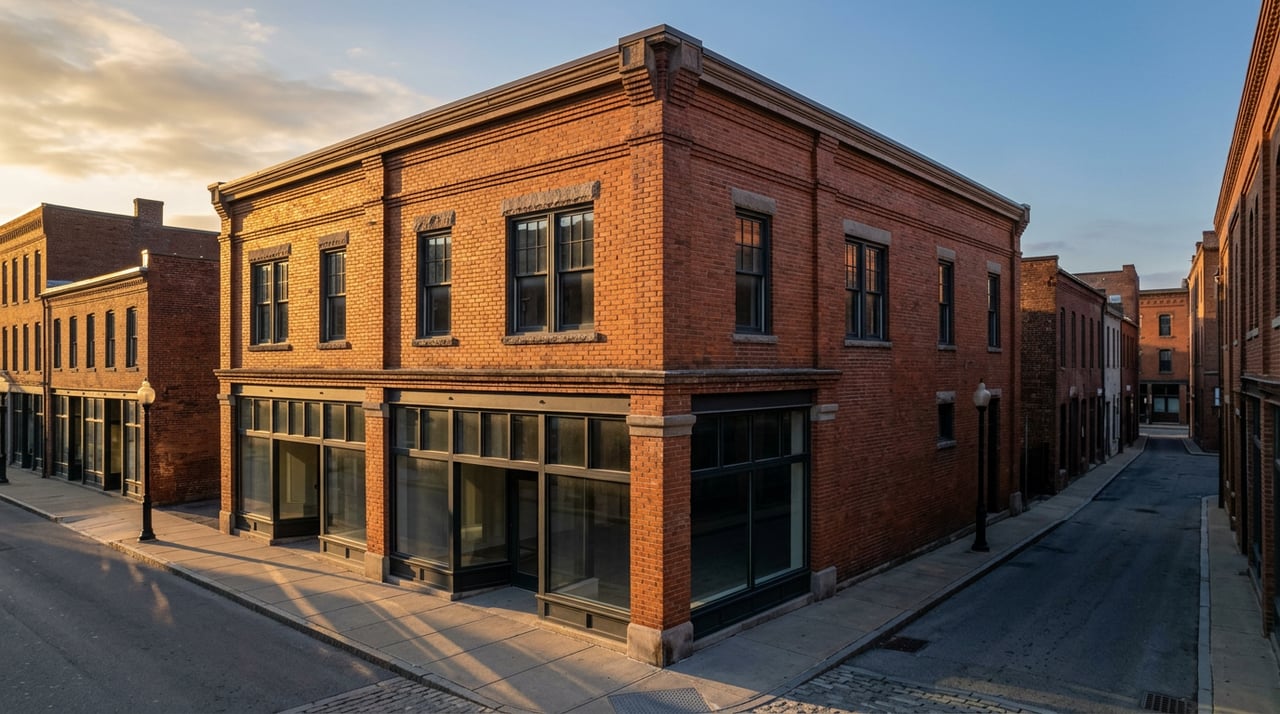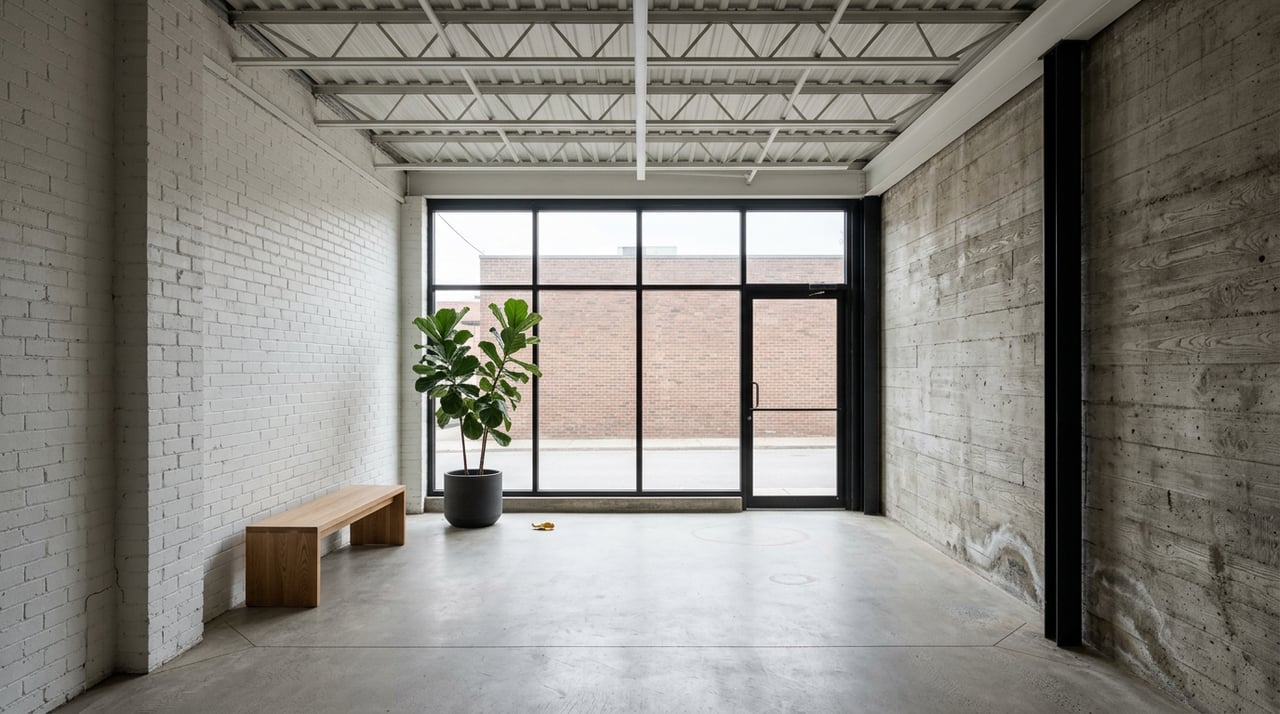
On Carbondale's Main Street, inside one of the town's oldest commercial buildings, Strange Imports recently gave up its storefront in the Dinkel Building to Mountain Tide Provision Co., a new venture from local owner Greg Morrison. The turnover barely registered as news. A few blocks away, at the site of the old City Market, roughly 45,000 square feet of retail space has sat empty since 2020. SRS Real Estate Partners, which manages the shopping center, even approached the new owners of Ace Hardware, the Mortell family, about moving in and expanding. They passed.
Both of these things are true in the same small town at the same time. And both are hiding behind a single number that real estate coverage tends to cite as a sign of health: Carbondale's commercial occupancy rate, which has sat between 93 and 96 percent for most of the last decade. That number is accurate. It is also close to useless if you're trying to figure out whether you can actually get space here, and at what price.
The Number That Never Moves
Since 2017, The Sopris Sun has run its own informal census of commercial space in Carbondale, walking storefronts and cross-checking listings rather than relying on a national data provider. The results have been strikingly consistent.
| Year | Occupied | Vacant | Occupancy |
|---|---|---|---|
| 2019 | 398 | 26 | 94% |
| 2023 | — | — | 93%, matching pre-pandemic conditions |
| 2025 | — | — | roughly 96% |
A market that survived a pandemic, a wave of remote work, and a decade of e-commerce anxiety without its occupancy rate moving more than three points is not describing healthy demand. It's describing a ceiling. Carbondale simply doesn't add commercial square footage fast enough for the number to move much in either direction. What actually happens instead is turnover, and the turnover is not evenly distributed.
Where the Turnover Actually Happens
Small storefronts change hands quickly and quietly. In the same stretch of Main Street where Mountain Tide replaced Strange Imports, the Dinkel Building's other tenants, including Steve's Guitars, The Nugget, and newer additions like The Crow and Key, stayed put after negotiating new terms with the building's new owner, Rick Holmstrom, a California-based CEO. Across the street, Sopris Engineering absorbed open units in the Centennial Building, leaving that building fully leased for the first time in a while. Aspen Barbershop moved out of the Sopris Liquor & Wine building and into the newer Carbondale Marketplace development. A new diner, 502 Diner, took over the space Honey Butter left behind, bringing a Central American twist to classic diner food.
None of this shows up as new vacancy in the annual count, because none of it is vacancy in any meaningful sense. It's a rotation of tenants through a fixed inventory of small-format space, and it happens fast enough that a business owner scanning listings on any given week sees almost nothing available, even though plenty of square footage is technically changing hands over the course of a year.
The Buildings the Number Doesn't Explain
Then there's the other half of the story: the buildings that don't turn over at all. The old City Market has been vacant since around 2020, which puts it at roughly six years and counting. At Hayden Place, the retail building that replaced the old Sopris Shopping Center, nearly 10,000 square feet has sat empty since the building was completed, essentially unchanged from the 7,500 of 10,370 square feet reported vacant there back in 2023.
These aren't failures of demand. They're failures of fit. A 45,000-square-foot former grocery anchor and a big, undivided retail shell don't match what a town of Carbondale's size and business mix actually needs, which is mostly small, flexible storefronts under a few thousand square feet. The space exists. The tenant base for that particular shape of space doesn't.
That's the piece the headline occupancy number erases. Blend a town's easiest-to-lease category with its hardest-to-lease category and you get one smooth percentage that tells you nothing about which side of that line your search will land on.
What Rent Tiers Tell You About Which Side You're On
Local brokers, including Lynn Kirchner of Amoré Real Estate, have long used a rough shorthand for this: Carbondale's Main Street has historically commanded somewhere in the $22 to $30 per square foot range, well below the roughly $50 per square foot seen in Willits, the mixed-use submarket within Basalt, and nowhere near the hundreds per square foot that Aspen commands. Some business owners have looked at those numbers and considered the Front Range instead, where retail rent runs closer to $15 per square foot with landlords offering incentives to fill space.
Listings active as of August 2026 suggest that middle tier has moved up. Carbondale commercial space on the market is asking roughly $29.50 to $42 per square foot, and a newly built 2,300-square-foot office space is on the market at $47 per square foot. That's not a market cooling off. It's a market where the cheapest, oldest small-format space has largely disappeared from the available pool, leaving newer construction to set the price ceiling almost by default.
If you're pricing a lease and the number you're quoted feels high relative to what you remember hearing about Carbondale rents a few years back, that's not a broker padding the number. It's the small-format shortage expressing itself in dollars.
The Supply That's Actually Coming
Two projects are worth watching more closely than the vacancy rate itself. On Highway 133, a new ANB Bank building was under construction near the new City Market as of last year's count, with 14,000 square feet of commercial space planned. And in mid-August 2026, Carbondale's Board of Trustees selected Bond/Brookside, a workforce housing developer founded in 2023, to build the town's long-planned Town Center project on 1.4 acres of town-owned land around the Thunder River Theatre Company.
The detail worth sitting with: the town's own request for proposals called for 10,000 to 20,000 square feet of commercial space in that project, envisioning room for Carbondale Arts, a business incubator, or theater expansion. The winning design delivers 3,324 square feet. Even when the town deliberately set out to add commercial inventory on its own land, the result came in at roughly a fifth of what it asked for. That's not a knock on the developer. It's a fairly clean illustration of how hard it is to add small-format commercial space in this market even when you're trying.
What This Means If You're Leasing or Buying in Carbondale Now
- If you need under roughly 2,000 square feet, don't expect to shop a list of active listings the way you would in a larger market. The real inventory moves through relationships and word of mouth before it ever gets marketed. Build those relationships before you need the space, not after.
- If you need 5,000 square feet or more, you may have more leverage than the headline occupancy number suggests. The buildings that have struggled to lease, like Hayden Place, exist precisely because most tenants don't need that much space. If you do, that mismatch works in your favor on price and terms.
- Watch the Town Center and ANB Bank projects as your actual supply signal, not the annual occupancy percentage. A handful of new leases in either building will matter more to your search than any shift in the townwide rate, which has proven remarkably resistant to moving at all.
- Benchmark rent against Willits and Aspen, not against a national average. Carbondale sits in a deliberate middle tier of the valley's pricing, and that tier has been rising as older, cheaper small-format space disappears from the market.
FAQ
Does a 96 percent occupancy rate mean I'll have to overpay for space? It depends heavily on the size you need. For small storefronts, yes, expect limited options and rising asking rents on whatever does turn over. For larger formats, the two long-standing vacancies in town suggest the opposite: more room to negotiate than the headline number implies.
How does Carbondale compare to Basalt or Glenwood Springs on rent? The clearest comparison available is to Willits, the Basalt submarket, where rents have historically run near $50 per square foot against Carbondale's $22 to $30 range. Aspen sits far above both. Carbondale has functioned as the valley's middle tier, though that tier has been climbing as small-format space has tightened.
Should I wait for the vacancy rate to loosen before signing a lease? Given that the rate has held between 93 and 96 percent since at least 2019, through a pandemic and years of e-commerce disruption, waiting for the townwide number to change is not a strategy. The more useful move is tracking specific buildings and specific pipeline projects, since that's where the actual availability lives.
Carbondale's commercial market rewards people who understand which building is turning over, which one has been stuck for years, and why. That's the kind of read that comes from appraisal-grade analysis paired with a broker's ear to the ground, not from a single townwide percentage. If you're weighing a lease, a purchase, or a redevelopment play in Carbondale or anywhere else in the Roaring Fork Valley, Gabe Molnar can help you see past the headline number to the mechanism underneath it. Let's Connect.