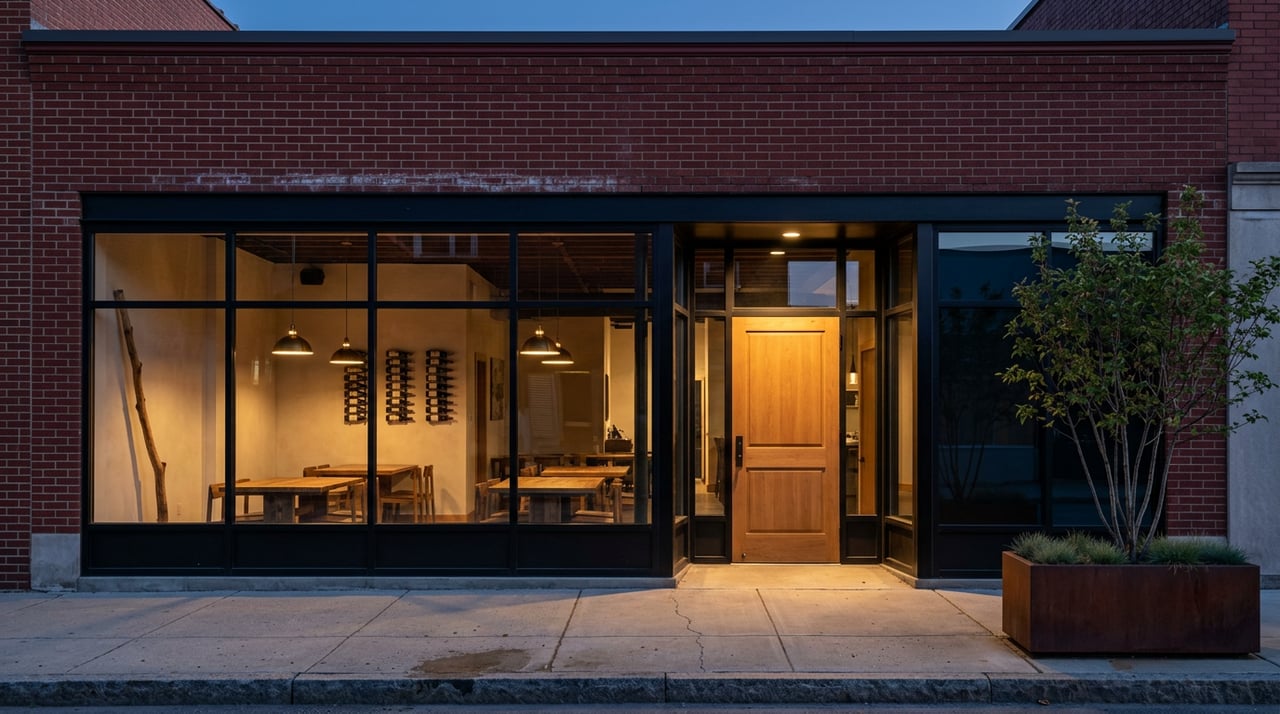
A search for “new restaurants Carbondale summer 2026” produces what looks like a conventional opening list. Townline Trucks, Amara, The Tavern, Sprazzo and Kedai have all arrived within a relatively short period.
The more useful story is what connects them.
Carbondale is drawing from a deep pool of Roaring Fork Valley restaurant experience. Sommeliers, managers, chefs and owners with backgrounds in Aspen and Snowmass are applying that experience to smaller, more casual and more locally calibrated concepts. At the same time, established restaurant addresses are being put back to work rather than replaced with an entirely new district.
That distinction matters. Main Street is not becoming a copy of Aspen. It is absorbing some of Aspen’s operating knowledge while retaining a distinctly Carbondale mix of formats, price points and gathering places.
“Re-tenanting” is used here in the broad commercial sense. Public reporting does not establish whether every operator owns or leases a particular space. What can be documented is the change in occupancy, concept and use across several downtown addresses.
What “Aspen’s restaurant class” actually means
The phrase does not mean that every new restaurant is Aspen-owned. Kedai Pho & Japanese Cuisine and Townline Trucks should not be forced into that description without evidence.
It refers instead to an experienced hospitality network that has worked across Aspen, Snowmass and the larger valley. That network understands service, beverage programs, kitchen execution and the demands of operating in a mountain market. Several members of it are now choosing Carbondale for their next concept.
The clearest case is Amara Kitchen & Wine Bar.
Co-owner Maria J. Cardenas began her Aspen career at The Little Nell before holding wine or management positions at Monarch Steak House, Betula and French Alpine Bistro. Her husband and co-owner, Ricardo Leyvas, also has Aspen hospitality experience, including management at The Little Nell.
They did not reproduce an Aspen dining room at 46 North Fourth Street. Amara is a 47-seat Mediterranean-influenced restaurant and wine bar presented as relaxed and locals-first. The professional background comes from upvalley. The format responds to Carbondale.
That is the pattern to watch.
The 2026 re-tenanting map
| Address | Current concept | Previous use or history | Timing |
|---|---|---|---|
| 111 Main Street | Townline Trucks | Site with a 23-year connection to Busy Bee Travel Agency | Opened January 23, 2026 |
| 225 Main Street | Izakaya Carbondale | Established Carbondale sibling of Kenichi Aspen | Opened in 2018 |
| 335 Main Street | Kedai Pho & Japanese Cuisine | Former Allegria space | Opened spring 2026 |
| 580 Main Street | The Tavern Carbondale | Former La Raza space | Soft-opened February 5, 2026 |
| 689 Main Street | Sprazzo | Formerly The Painted Pig and historically associated with Six89 | Opened around the turn of 2026 |
| 46 North Fourth Street | Amara Kitchen & Wine Bar | Former Bodegón space | Opened in late January 2026 |
This concentration is more informative than the individual openings. Four Main Street addresses and one space immediately off the corridor have received new food-and-beverage concepts. Izakaya supplies an earlier example of the same upvalley-to-Carbondale transfer.
Existing restaurant spaces are doing much of the work
The strongest commercial interpretation is adaptive reuse.
The Tavern replaced La Raza. Amara replaced Bodegón. Kedai replaced Allegria. Sprazzo brought another restaurant program into a building previously occupied by The Painted Pig and long associated with Six89.
Restaurant real estate is specialized. A dining room, kitchen, bar and service area impose different physical demands than a conventional retail storefront. A known restaurant address may also carry established customer habits, even when the name and menu change.
That does not prove that any particular conversion was inexpensive. There is no reliable current dataset for executed leases, tenant-improvement costs or downtown restaurant rents. Claims about lower build-out costs would go beyond the available evidence.
The visible pattern is narrower and still meaningful: operators are repeatedly selecting locations with food-service history instead of trying to create demand at unrelated storefronts.
Sprazzo shows how a new operator can also expand the use of an existing building across the day.
The restaurant at 689 Main Street moves from café service in the morning to happy hour and an Italian dinner program later on. Chef Daniel Leon trained at Le Cordon Bleu and worked at Felix Trattoria in Los Angeles, Safta in Denver and Anderson Ranch in Snowmass. His stated local partners include Marigold Livestock Co., Nieslanik Beef and Toadstool Traditions.
That combination is central to the new Main Street model: outside training, valley experience, an established restaurant property and local sourcing where the operation can support it.
The formats are broadening, not moving in one direction
A simple upscale narrative does not fit the evidence.
The Tavern Carbondale occupies the former La Raza space at 580 Main Street. Owners Jeff and Ashley Moerke also operate The Tavern Kitchen and Bar and Il Poggio in Snowmass Village. Their earlier Aspen activity included the Harper & Hudson retail and food concept near the Silver Queen Gondola.
In Carbondale, The Tavern has emphasized affordability, daily service, live events, community feedback and relationships with local producers. That is experienced hospitality being adjusted for regular local use rather than imported without changes.
Kedai adds another category. Opened in spring 2026 at 335 Main Street, Kedai Pho & Japanese Cuisine serves pho, sushi, Japanese entrées and lunch daily. Its documented history does not establish the same Aspen lineage, but its presence strengthens the larger re-tenanting story. The former Allegria space remains in restaurant use while the cuisine and daily occasion change.
At the east end of downtown, Townline Trucks uses a different model again. The property at 111 Main Street combines a full bar, rotating food trucks, outdoor gathering areas and music programming. Its Busy Bee cocktail refers to the Busy Bee Travel Agency, which operated at the address for 23 years.
Townline also extends Main Street’s food-and-beverage activity toward the town boundary and Rio Grande Trail connection. It is neither a conventional restaurant nor an Aspen dining-room transplant. It broadens the corridor by giving people another reason to use its eastern end.
Izakaya shows that the transfer started earlier
The 2026 openings make the pattern easier to see, but they did not create it.
Izakaya Carbondale opened at 225 Main Street in 2018 as the more casual sibling of Kenichi Aspen. Kenichi dates to 1991. That relationship established an earlier model for translating a known Aspen operation into a Carbondale format rather than reproducing the original concept exactly.
The word “casual” matters here. Aspen-derived experience does not automatically produce formal dining or Aspen-style pricing. It can also produce a Japanese pub, a neighborhood tavern, a compact wine bar or an Italian café that stays active through several dayparts.
This is why the current change looks more durable than a single restaurant trend. The operators are not all pursuing the same customer occasion.
Main Street supplies more than storefronts
Restaurants benefit when nearby uses generate reasons to be on the street. Downtown Carbondale has an event system that can support that behavior, even though reliable pedestrian counts are not available.
For the July 3, 2026 First Friday, Main Street closed to through traffic between Weant Boulevard and Second Street. Programming included music, dancing, gallery activity and late retail hours.
The 55th Carbondale Mountain Fair runs July 24 through 26 in Sopris Park and downtown, with an Oasis Stage and block-party programming on Main Street.
These events do not guarantee restaurant performance. They do create shared reasons to visit the corridor, which is different from asking each tenant to generate every trip independently. A full-service restaurant, food-truck court, bar and café can each convert that activity in a different way.
The district effect becomes stronger when several businesses remain active before, during and after an event. Sprazzo’s café-to-dinner schedule, The Tavern’s daily operation and Townline’s combined food, bar and music model all expand the range of times when Main Street can be used.
What to watch after summer
Three questions will show whether this is a lasting re-tenanting cycle or simply a concentrated opening season.
Can the new concepts hold multiple dayparts?
Morning coffee, lunch, happy hour and dinner create different operating demands. Concepts that use their spaces across more of the day may contribute more consistent activity to the corridor, but they must also staff and execute those periods.Do local supply relationships deepen?
Sprazzo has identified Marigold Livestock Co., Nieslanik Beef and Toadstool Traditions as partners. The Tavern has also discussed working with local producers. The relevant question is whether those relationships become recurring parts of the operating model rather than occasional specials.Does investment continue beyond Main Street?
Sprazzo owner Chester White is also developing Main Line Social at 522 Highway 133. The global-street-food and community-space concept remains listed as coming in 2026, with no more precise opening date announced. If it proceeds, it will show that current restaurant investment is not confined to one downtown block.
A transfer of skill, not a copy of Aspen
Carbondale’s new restaurant cycle is best understood as a transfer of operating skill into existing commercial spaces.
Amara brings Little Nell and Aspen wine-program experience to a compact Fourth Street room. The Tavern adapts a Snowmass operator’s model around affordability and everyday local use. Sprazzo combines broader culinary training with Snowmass experience, multiple dayparts and named valley producers. Izakaya provides an earlier example of an Aspen restaurant group choosing a more casual Carbondale expression.
Townline and Kedai keep the pattern from becoming too tidy. They show that the corridor is broadening through local experimentation as well as upvalley talent.
That is the real change on Main Street in summer 2026. The district is not being remade into Aspen. It is becoming a place where experienced restaurant operators can apply what they learned upvalley to a different set of spaces, routines and customer expectations.
For property owners, operators or investors evaluating a specialized commercial asset in the Roaring Fork Valley, the useful work begins with the property itself: its operating history, physical constraints, possible uses and fit within the surrounding district. Gabe Molnar brings an appraiser’s discipline and a broker’s execution to that analysis through Douglas Elliman.
Let’s Connect.